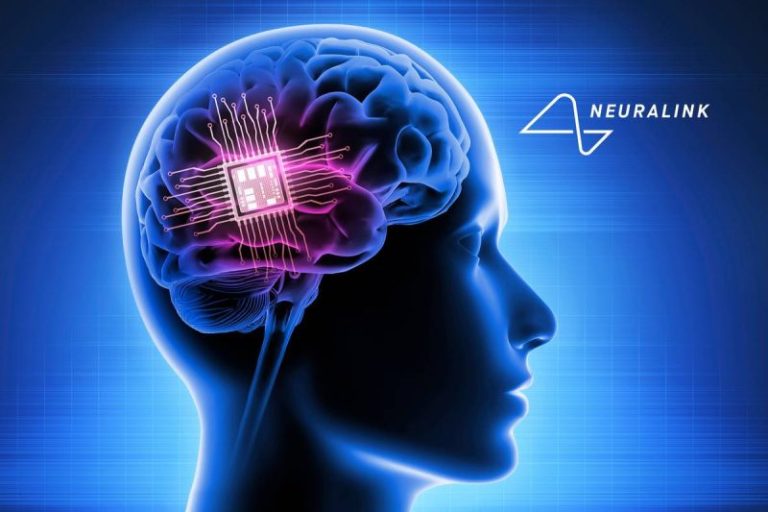
Elon Musk’s Neuralink has captured the public’s attention and imagination with its futuristic vision of connecting the human brain to computers.
Neuralink has drawn interest to the brain computer interface (BCI) sector with its N1 implant, which is undergoing human trials in patients with spinal cord injuries (SCIs) and ALS.
Musk’s company is far from the only one developing BCI tech to assist users with conditions such as SCIs, ALS and neurological disorders.
‘The number of new firms entering the space and the amount of venture funding being distributed to startups surpasses any other product category we have seen in the 25 years we have been covering the neurotechnology industry,’ Neurotech Reports stated in June 2025.
As Neuralink continues to make strides, investors are wondering how to get a piece of the action by investing in the neurotechnology venture.
Because it is privately held, Neuralink stock isn’t accessible to the average person — but that doesn’t mean it’s impossible to get exposure to this future-looking medical research company. Read on to learn how to participate in the growth of this exciting business, and other BCI firms you can invest in.
What is Neuralink?
Neuralink is a neurotechnology startup that was founded in 2016 by Tesla (NASDAQ:TSLA) CEO Musk and a team of eight scientists and engineers in 2016.
It was first reported on in 2017, and two years later, in June 2019, the company held and streamed its public launch event to showcase the technology it is developing: an innovative brain-computer interface.
Instead of using traditional electrodes, which, according to a company whitepaper, can be bulky and damaging to brain tissue, Neuralink’s BCI uses “ultra-thin threads” that are implanted into the brain using a robotic device that resembles a sewing machine. Once implanted, the electrodes develop a BCI, stimulating the brain and monitoring activity, and the threads connect to a custom-designed chip that can read data from groups of neurons.
Musk announced the coin-sized Telepathy chip, with over 1,000 electrodes 20 times finer than hair, in January 2024.
Potential uses of BCI technology include helping paralyzed individuals regain control of their limbs and restoring vision. Musk told his audience during Neuralink’s 2019 launch event that this technology could have a wide range of applications in medicine, such as restoring sensory and motor function in people with spinal cord injuries or neurological disorders. Additionally, an early goal of development is translating neuron signals into computer commands, which would allow humans to control devices like computers and smartphones with their brainwaves.
Musk has claimed that BCI could even facilitate direct communication between humans and machines, although some members of the neuroscientific community are skeptical.
Other experts have suggested that Neuralink’s work is not necessarily novel, as Dr. Jason Shepherd, an associate professor of neurobiology at the University of Utah, told Business Insider in 2020. “All the technology that he showed has been already developed in some way or form,’ he said. ‘Essentially, what they’ve done is just package it into a nice little form that then sends data wirelessly.”
Other experts in the field have ethical concerns about how Neuralink is conducting its clinical trials and the broader implications of disregarding established standards.
“If you decide to play with fire in a house, you increase the risk threshold not only of yourself but of the whole house,” Marcello Ienca, a professor of ethics of AI and neuroscience at Technical University of Munich, told Forbes in 2024. “My fear is that Neuralink’s disregard for the ethical aspects of their technology may cause a backfire effect for the entire neurotechnology community.”
How much is Neuralink worth?
Neuralink was valued at around US$9.7 billion as of June 2025, but as a privately held business, much of its financial information is kept under wraps. That said, US Securities and Exchange Commission (SEC) documents containing information about its funding rounds provide some insight.
The earliest came in 2017, when the company raised US$27 million out of a planned US$100 million in a Series A funding round. In April 2019, SEC filings show the company acquired US$39 million out of a planned US$51 million in a Series B funding round. A limited amount of information has been made available to the public, and the identities of the investors have not been publicly disclosed. However, some news outlets have speculated that funding could have come from a combination of venture capitalists, or from Musk himself and the Neuralink team.
In 2021, Neuralink received what was then its largest amount of money to date, raising US$205 million in a funding round led by tech investment firm Vy Capital. Other participants included Google Ventures, the venture capital arm of Alphabet (NASDAQ:GOOGL); OpenAI CEO Sam Altman; Fred Ehrsam, co-founder of Paradigm and Coinbase Global (NASDAQ:COIN); and Ken Howery, co-founder of PayPal Holdings (NASDAQ:PYPL) and Founders Fund.
In May 2023, as Neuralink faced public backlash over accusations of animal mistreatment, it received clearance from the US Food and Drug Administration (FDA) to run the first human trial of its brain implant. Just months later, in August, Neuralink closed a US$280 million funding round led by Founders Fund. The filing was amended in November 2023 to reflect an additional US$43 million, bringing the total to US$323 million.
Most recently, the company announced the closure of a US$650 million Series E funding round in June 2025.
Is Neuralink approved for human trials?
In May 2023, Neuralink received clearance from the US Food and Drug Administration (FDA) to run the first human trials of its brain implant. The company opened a patient registry in early 2023 that allowed people who had at least one of a qualifying list of conditions to volunteer for upcoming clinical trials. It is also approved for human trials in Canada, Great Britain and the UAE.
The first US study, dubbed PRIME — Precise Robotically Implanted Brain-Computer Interface — is specifically focused on patients with cervical spinal cord injuries or amyotrophic lateral sclerosis (ALS). It has an estimated primary completion date of January 2026 and is estimated to be fully completed by January 2031.
The study’s first participant, a patient with quadriplegia, received the implant on January 28, 2024; Musk reported a quick recovery and ‘promising neuron spike detection’ the following day.
A month later, Musk said the patient, who is named Noland Arbaugh, could control a cursor mentally. Arbaugh shared 100-day positives in May 2024, calling it a success over prior tech. One of the largest benefits is that it allows him to operate his computer and other devices lying down, while he needed assistance for setup and repositioning with prior devices. He explained that the change gives him more freedom to live on his own time.
The study’s next two participants were a patient who became paralyzed following a spinal cord injury from a diving accident and another who lost use of his limbs to ALS. The company issued an update on their progress in February 2025, with all three patients touting positive changes following the procedure.
As of January 2026, Neuralink has now implanted devices in 21 trial participants across the US, Canada, the UK and the UAE.
The UAE-PRIME trial began recruiting in May 2025 via the Cleveland Clinic Abu Dhabi, while the GB-PRIME study launched in Great Britain two months later.
Neuralink is also conducting the CONVOY study in the US, announced in November 2024, testing the use of the implant to control an investigational assistive robotic arm. It is open to participants of the PRIME study.
Meanwhile, the company received FDA breakthrough device designation for Blindsight, a capability being developed to generate visual perception by activating brain areas responsible for visual function, as well as for its speech restoration technology, in 2024 and 2025, respectively. Blindsight trials aimed at restoring vision for the blind are reportedly planned to begin soon in the UAE.
Looking ahead, Musk says the company will begin high-volume chip production in 2026. In a January update, Neuralink shared plans to improve the implant, including raising electrodes from 1,000 to 3,000. It is also investigating a change to the surgical procedure that would reduce invasiveness by inserting the implant’s threads through the dura mater, the brain’s tough outer membrane.
How to invest in Neuralink?
With Neuralink continuing to move forward, how can investors get a piece of this up-and-coming technology?
The firm has yet to go public, so purchasing Neuralink stock is not an option for many investors. However, there are still ways for investors to potentially profit from Neuralink’s growth before it goes public.
The vast majority of Neuralink’s funding has come from venture capitalists and a handful of billion-dollar companies. Investors can gain indirect exposure to Neuralink before its IPO by buying publicly traded companies that have invested in the company. This includes Alphabet (NASDAQ:GOOGL), which has funded Neuralink via its subsidiary Google Ventures. This strategy captures potential upside from Neuralink’s growth.
Those who qualify as accredited investors could also potentially invest in a Neuralink funding round. According to the SEC, an accredited investor must have a net worth of at least US$1 million, not including the value of their primary residence, or an annual income of at least US$200,000 for individuals and US$300,000 for married couples. There must also be a reasonable expectation of the same level of income in the year of filing.
Individuals can also qualify as accredited investors if they are investment professionals in good standing. In that case, the SEC’s guidelines indicate that they need to hold either a general securities representative license, an investment advisor representative license or a private securities offerings representative license.
Entities like banks, insurance companies or investment firms with total assets of at least US$5 million may also qualify as accredited investors. Certain types of entities, such as private business companies and small business investment companies, may be exempt from the standard asset value requirements for accredited investor status.
It’s also worth noting that Neuralink is just one of several companies currently working on developing BCI technology:
The potential for BCI to impact various industries such as robotics, medicine and biotech has generated a growing amount of interest and excitement. Additionally, heightened interest in the artificial intelligence (AI) sector has led to more research and exploration in related fields, and has attracted increased investment in fields benefiting from AI advancements, including robotics and medicine.
AI is also being used as a tool to help discover new insights and make moves that might not have been possible without its use. Scientists in California have even developed a brain implant capable of decoding and vocalizing inner speech.
Finally, one of the simplest ways to gain exposure to Neuralink would be through an exchange-traded fund (ETF) that invests in companies related to BCI technology. While there isn’t an ETF that exclusively focuses on BCIs, there are funds that offer exposure to related themes.
In the health sector, some options covering similar themes include medical device ETFs and the iShares Healthcare Innovation ETF (LSE:HEAL,OTCPK:BLKIF), a fund that consists of companies that are developing new and innovative healthcare technologies.
Two other options are the Global X Robotics & Artificial Intelligence ETF (NASDAQ:BOTZ), which includes companies that are involved in the development of robotics and AI, and the ARK Innovation ETF (ARCA:ARKK), which focuses on disruptive technologies across multiple industries, including healthcare and robotics.
As with any investment decision, it’s important to perform due diligence on available options, including comparing ETFs, to ensure they align with one’s investment goals.
Securities Disclosure: I, Meagen Seatter, hold no direct investment interest in any company mentioned in this article.
This post appeared first on investingnews.com