Archive

February 3, 2026

Browsing

Rick Rule, proprietor at Rule Investment Media, is positioning in the oil and gas sector, but thinks a bull market is two or two and a half years away.

In his view, copper is likely to be the next commodity to begin a bull run.

Click here to register for the Rule Symposium.

Securities Disclosure: I, Charlotte McLeod, hold no direct investment interest in any company mentioned in this article.

This post appeared first on investingnews.com

Gold and silver prices have experienced one of their most savage corrections in decades.

After hitting a record high of close to US$5,600 per ounce in the last week of January, the price of gold took a dramatic U-turn on January 30, dropping as low as US$4,400 in early morning trading on Monday (February 2).

That’s a loss of more than 21 percent in a very short timespan.

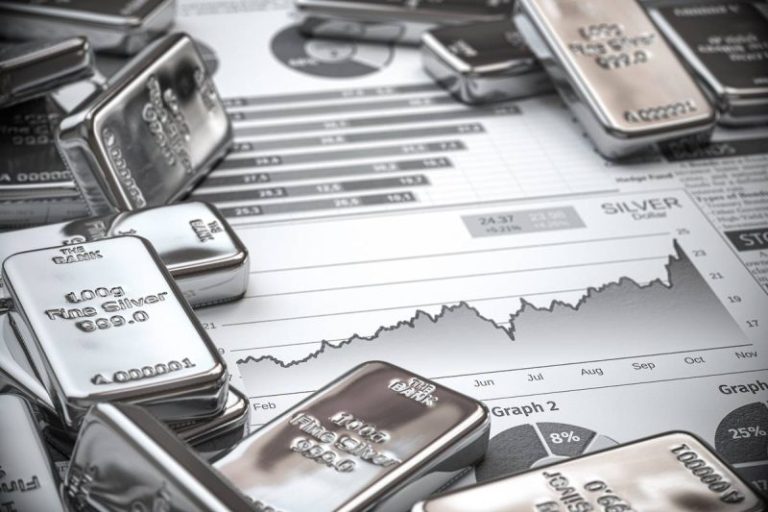
Silver is also on this rollercoaster trend. As per usual, the white metal slid even harder than gold, dropping from an all-time high of more than US$120 per ounce to a low of about US$71 on Monday, a steep 35 percent drop from its peak.

As the trading day progressed, gold and silver prices demonstrated stabilization with slight rebounds; however, volatility remains the name of the game as investors take time to decipher what the shift means for precious metals markets.

Let’s look at the primary driver for the shakeup in gold and silver prices and what it may mean for investors.

Trump’s Fed chair nomination calms risk-off sentiment

Precious metals are a complex market, and prices are driven by a myriad of factors.

For this latest price movement, the biggest trigger was US President Donald Trump’s nomination of Kevin Warsh, a former Federal Reserve governor, to replace Jerome Powell as the next Fed chair.

Powell, whose term expires this coming May, has faced heavy criticism and targeted legal attacks from the Trump administration, which wants the Fed to cut interest rates in a hurry.

For months now, market participants have been piling into gold on the belief that Trump would try to use his position to nominate a puppet dove as Fed chair and push for greater influence over monetary decisions.

If that were to occur, it would not only undermine Fed independence, but looser policy decisions could in turn further weaken the US dollar on the global stage and lead to higher inflation.

Such an environment is price positive for safe-haven assets such as gold and silver. But with the more hawkish Kevin Warsh as the nominee, the belief is that swift rate cuts aren’t necessarily on the table.

“His focus on real-time data and fundamentals could bring much-needed modernization to the Fed’s framework, at a time when investors are seeking transparency and credibility in monetary policy.”

That shared sentiment among investors led the US dollar to strengthen sharply. The precious metals and US dollar share an inverse relationship — as gold and silver are typically priced in US dollars, a stronger dollar makes purchasing them much more expensive for foreign buyers. This leads to lower demand and downward pressure on prices.

Will gold and silver prices recover?

Does the largest correction in decades mean the party’s over for gold and silver prices?

It’s more likely to be a healthy correction in an otherwise strong bull market for precious metals. Don’t forget that one policy event does not foretell the complete collapse of the strong fundamentals underlying the gold and silver markets. There is still a very strong case for the precious metals bull market given the high demand for gold from central banks and institutional investors. And industrial demand for silver is still expected to eclipse available mine supply.

Not to mention, there’s still optimism that the Fed will need to lower rates to deal with the nation’s ever-growing mountain of debt — which could become impossible to service at higher rates.

“Our view remains that structural forces continue to support a lower-rate environment, which should be constructive for risk assets. We remain focused on fundamentals and are positioning client portfolios accordingly,” stated Hulick.

For those investors still optimistic that gold and silver are in the early stages of a bull market cycle, this rundown in gold and silver prices may represent a buying opportunity.

Securities Disclosure: I, Melissa Pistilli, hold no direct investment interest in any company mentioned in this article.

This post appeared first on investingnews.com

The energy revolution is here to stay, and electric vehicles (EVs) have become part of the mainstream narrative.

The shift toward green energy is gathering momentum, with governments adding more incentives to accelerate this transition. Increasing EV sales are good news for battery metals investors, as EVs are significant drivers for commodities such as lithium, cobalt and graphite, key components in the cathodes of EV batteries. Additionally, interest in EV options outside of Tesla is heating up, and Chinese EVs are increasing in popularity outside of the country.

Read on to learn about the top US and Chinese EV stocks, and the batteries and battery suppliers they’re using for their current and upcoming models.

1. Tesla (NASDAQ:TSLA)

Market cap: US$1.62 trillion

First on the list is EV maker Tesla, which has brought significant attention to the EV narrative.

The company’s story starts in 2003, when it was founded by Martin Eberhard and Marc Tarpenning. Elon Musk invested in the company in 2004, becoming the largest shareholder, and eventually became its CEO in 2008. A well-known story for battery metals investors, the company made headlines in 2014 when it broke ground at its first gigafactory in Nevada, US, an unthinkable proposition at the time.

Outside of the US, Tesla also has gigafactories in China and Germany. Tesla’s massive Shanghai Gigafactory was the company’s first auto plant outside of the United States. The company produces Model 3s and Model Ys for China and global export.

Tesla uses a range of different lithium-ion batteries in its models. In partnership with Panasonic (TSE:6752), at its Nevada gigafactory Tesla produces batteries with nickel-cobalt-aluminum (NCA) cathodes — different from most of Tesla’s competitors, which use a nickel-cobalt-manganese (NCM) mix.

Tesla announced in 2021 that it was changing the battery chemistry for its standard-range vehicles to lithium-iron-phosphate (LFP) cathodes, which are cobalt- and nickel-free. China’s largest battery maker, CATL (SZSE:300750), is a key supplier of LFP batteries for Tesla, particularly for the Shanghai and Berlin gigafactories.

Changes in US tariffs on EVs made or sourced in China have impacted Tesla’s business, leading the company to try diversifying its supply chain. Last year, South Korea’s LG Energy Solution (KRX:373220) signed a US$4.3 billion deal to supply Tesla with LFP batteries from its factory in Michigan, US, starting in 2027.

On the other hand, Tesla’s prime EV position got a boost in the first quarter of 2026 Canada announced it would allow imports of up to 49,000 Chinese-made EVs per year, and lowered tariffs on them from 100 to 6.1 percent. Half of that quota could apply to Tesla’s EVs made in Shanghai, while the other half is dedicated to EVs priced under C$35,000.

Image via Tesla.

2. BYD Company (OTCPK:BYDDY,HKEX:1211)

Market cap: US$116 billion

Leading Chinese EV maker BYD Company was founded in 1995 and is a top producer of several kinds of rechargeable batteries, including nickel-metal hydride batteries and NCM batteries. BYD has a vertically integrated supply chain, from mineral battery cells to battery packs.

Backed by Warren Buffett, in 2020 BYD officially launched its Blade battery, a less bulky LFP battery. The following year, the company announced that it would use the Blade LFP batteries for all of its pure electric models.

In April 2025, BYD released two new EV models, the Han L sedan and Tang L SUV, based on its new Super e-platform, which allows users to add 400 kilometers (248 miles) of range in five minutes of charging, and charge to 100 percent in 20 minutes.

BYD’s range of models include low-cost options such as the Seagull and Dolphin. Because of this, the company stands to benefit from Canada’s decision to allow imports and slash tariffs for up to 49,000 Chinese EVs per year, half of which must be under C$35,000.

For the first time, in 2025, BYD overtook Tesla as the world’s biggest EV seller in terms of annual sales. BYD sold 2.25 million units for the year, up 28 percent over 2024, compared to the 1.64 million units sold by Tesla in 2025, down 9 percent from the previous year.

Image via BYD.

3. Rivian Automotive (NASDAQ:RIVN)

Market cap: US$18.08 billion

Founded in 2009 in Florida, US, Rivian designs, develops and manufactures EVs and accessories and sells them directly to customers in the consumer and commercial markets.

The US company is based in Irvine, California, and manufactures its vehicles in Illinois.

The carmaker announced plans to use cells made with LFP chemistries for its standard-level vehicles in 2022, and in 2023 announced plans to switch its entire lineup to this type of battery. South Korea’s Samsung SDI (KRX:006400) and LG Energy Solutions are Rivian’s current battery suppliers.

Last year, the company revealed e-scooters to market through its spinoff electric micromobility company named Also. The scooters are expected to hit the market in mid-2026. It has plans to launch a three-wheel EV line as well.

In early January 2026, Rivian reached a major milestone toward full-scale production of its new R2 with the manufacturing of validation builds at its plant in Illinois. This latest reiteration will be priced starting at US$45,000, with first deliveries slated for the first half of this year. Rivian sold 42,247 EVs in 2025.

Image via Rivian.

4. XPeng (NYSE:XPEV)

Market cap: US$17.49 billion

Xpeng is a Chinese EV maker focused on smart EVs. The company’s main manufacturing plant is located in Guangdong province.

Xpeng now uses LFP batteries for 99 percent of its EV lineup. CALB (HKEX:3931) is Xpeng’s largest battery supplier, and its other suppliers include CATL, BYD, Sunwoda Electronic (SZSE:300207) and EVE Energy (SZSE:300014).

Last year, the company showcased its 2025 XPENG X9 flagship vehicle, with self-driving capabilities powered by Xpeng’s self-developed Turing AI chip. At the same time, Xpeng unveiled its AEROHT Land Aircraft Carrier, slated for mass production in 2026. The company bills it as ‘the world’s first modular flying car.’

XPeng’s 2025 EV sales reached 429,445 units. The company has ambitious goals for 2026, aiming to sell between 550,000 and 600,000 EVs during the year. XPeng is launching four new SUV models this year: the XPeng G01 and XPeng G02, as well as two models from the Mona series, the D02 and D03.

Image via Xpeng.

5. Li Auto (NASDAQ:LI)

Market cap: US$17.03 billion

Li Auto bills itself as a pioneer in successfully commercializing extended-range EVs in China, and is a leader in China’s full-size and large SUV markets. The company started volume production of its first model, Li ONE, in November 2019, and launched its initial public offering in July 2020, raising US$1.1 billion.

Li Auto has battery supply agreements with CATL, Sunwoda Electronic and SVOLT Energy Technology.

One of the main differences between Li Auto and the other companies on this list is that Li Auto’s models allow battery pack charging with electricity or gas. The company calls this design extended-range EV technology.

Li Auto launched its first all-electric car, Li MEGA MPV, in 2024. In 2025, the company followed that with its second all-electric vehicle, the i8 SUV, which uses an NMC battery and maxes out at 536 horsepower. Li Auto also broadened its markets last year, launching three core models (Li L9, Li L7 and Li L6) in Egypt, Kazakhstan and Azerbaijan.

Li Auto achieved a significant milestone in 2025, with annual sales surpassing 1.5 million units. This made it “the first among China’s new EV startups to reach that mark,” according to the company’s Chairman and CEO Li Xiang.

Image via Li Auto.

6. NIO (NYSE:NIO)

Market cap: US$10.36 billion

Founded in 2014, Chinese EV maker NIO designs, jointly manufactures and sells smart and connected premium EVs.

NIO’s strategy includes its battery-as-a-service endeavor, a subscription purchasing model where buyers lease vehicle batteries. The company says the idea behind this move is to reduce vehicle costs. The service is run by a battery asset company, with NIO and leading battery maker CATL owning a stake. CATL is already NIO’s sole battery supplier.

The company has built battery swap stations that allow drivers with low batteries to pull up and have it swapped for a full battery within minutes. Its fifth generation swap stations are expected to roll out starting in 2026.

In September 2021, the company introduced a standard-range hybrid-cell battery that combines NCM and LFP cells. NIO is also offering the world’s longest-range semi-solid-state battery on a rental basis through its partnership with Beijing WeLion New Energy Technology.

In 2024, NIO launched its newest EV brand, Firefly, in China. The first model in this brand is a small car for city dwellers who struggle with finding convenient parking, as it can locate available spots and use parking assist to maneuver into them. Drivers are also be able to access the above-mentioned battery swap program.

NIO reported 2025 vehicle sales of 326,028 units, an increase of 46.9 percent year-over-year. Launched in September 2025, its flagship ES8 SUV became the fastest-selling EV in China in its price category by the end of the year. The company plans to bring three new large SUV models to the market in 2026, and expand into Australia and New Zealand in the second half of the year.

Image via Nio Newsroom.

7. VinFast Auto (NASDAQ:VFS)

Market cap: US$7.72 billion

VinFast Auto, Vietnam’s first global automotive manufacturer, is a multinational EV manufacturer producing both affordable and luxury EVs. The company’s lineup also includes an electric pickup truck known as the VF Wild.

VinFast has showrooms and service centers in North America, including in 14 US states and the Canadian provinces of Ontario, British Columbia and Québec.

Vietnam is the EV maker’s largest market, and it significantly expanded its footprint in Asia in 2025, adding numerous showrooms in the Philippines, Indonesia and India. Last year, the company brought a new manufacturing facility online in India and opened its first Indonesian assembly plant in December. It is scheduled to scale up production and launch new models, including electric two-wheelers, in 2026.

Image via VinFast.

8. Zhejiang Leapmotor Technology (OTC Pink:ZJLMF,HKEX:9863)

Market cap: US$7.58 billion

The Leapmotor brand first launched in China in 2017. The EV manufacturer designs and supplies its own battery packs for its vehicles.

Major auto maker Stellantis (NYSE:STLA) became a 20 percent shareholder in late 2023. The following year, the two entities formed the 51/49 joint venture company Leapmotor International, in which Stellantis holds the controlling interest. The joint venture is focused on selling and manufacturing Leapmotor vehicles outside of China.

The company’s current models in the market include seven seater SUV C16, mid-size crossover SUV C10, smart electric SUV C11, smart-tech C11 SUV, compact SUV B10, the new B01 sedan and T03 city EV.

Leapmotor unveiled its B01 electric sedan in April 2025. The vehicle is powered by LFP batteries from Gotion High-tech, CALB and Zenergy.

At the 2026 Brussels Motor Show, Leapmotor showcased the three EVs it has launched in Europe since expanding into the market: the B03X compact electric SUV, the B05 hatchback and the B10 range-extended electric vehicle.

Image via Wikimedia Commons.

9. Lucid Group (NASDAQ:LCID)

Market cap: US$3.59 billion

Headquartered in California, Lucid Group was founded in 2007 and produces luxury electric cars. The company’s first car, Lucid Air, is a state-of-the-art luxury sedan that is being produced at its US factory in Casa Grande, Arizona.

In April 2025, Lucid announced the acquisition of select Arizona-based facilities and assets of battery and fuel-cell EV company Nikola Corporation.

Lucid Motors uses high-performance Panasonic battery cells for its long-range electric vehicles. These cells are currently manufactured in Japan, but the company is transitioning to using batteries from Panasonic’s new facility in Kansas by mid-2026 to avoid Trump’s import tariffs.

Lucid plans to launch a full-scale manufacturing facility in Saudi Arabia in 2026, with an annual capacity of 150,000 vehicles by 2029.

The company’s Gravity SUV was named Esquire’s 2026 Car of the Year.

Image via Lucid.

10. Polestar Automotive (NASDAQ:PSNY)

Market cap: US$1.41 billion

Sweden-based electric performance car brand Polestar is owned by Geely Automobile Holdings (OTC Pink:GELYF,HKEX:80175). Up until early 2024, Volvo Cars was also a part owner, but it decided to hand Polestar entirely over to Geely to operate as an independent brand, attributing the move to slowing global demand for EVs.

Polestar’s current lineup includes the five door liftback Polestar 2, the luxury performance Polestar 3 SUV, the Polestar 4 compact coupe SUV and the Polestar 5 performance sedan, the last of which was released in 2025. The company is also planning the Polestar 7 compact SUV and the Polestar 6 roadster.

Polestar has experienced some difficulties in the last couple years, including software challenges in 2023 that caused delays in the rollout of the Polestar 3. In 2024, the company recorded a 15 percent drop in deliveries.

The EV maker’s bad luck seems to be turning around in 2025. Polestar sold a record 60,119 vehicles during the year, a 34 percent improvement over 2024.

This is in part thanks to Polestar’s efforts to capitalize on Tesla’s struggles with Musk and its brand image. In February 2025, Polestar began offering Tesla owners in the US and Canada discounts of up to $20,000 on new leases of its models. Its Q1 2025 sales jumped 76 percent year over year.

Image via SlashGear.

Securities Disclosure: I, Melissa Pistilli, hold no direct investment interest in any company mentioned in this article.

This post appeared first on investingnews.com

The silver price remains historically high despite a recent pullback, and many silver stocks haven’t kept pace.

Silver’s strong performance over the past year is the result of a perfect storm of factors, including an entrenched supply deficit, growing industrial demand, a weakening US dollar and deepening geopolitical and economic uncertainty.

For these reasons, investors are flocking to silver for both its safe-haven status and its developing role as a critical metal in energy, artificial intelligence and defense technologies.

As of early February, the silver price was trading in a range of US$70 to US$80 per ounce, while the Amplify Junior Silver Miners ETF (ARCA:SILJ) was trading between about US$31 to US$32 per share.

SILJ tracks small-cap and mid-cap producers, developers and explorers that derive most of their revenue from silver. The profit margins of this segment of the silver-mining industry are the most sensitive to rising silver prices, hence SILJ tends to outperform the price of physical silver during bull markets.

Why is there a lag between the silver price and silver stocks?

During a presentation at the Vancouver Resource Investment Conference (VRIC), held from January 25 to 26, Peter Krauth, editor of Silver Stock Investor and Silver Advisor, looked at the performance of silver stocks relative to the price of physical silver, honing in on the silver-mining exchange-traded funds.

‘So we actually have had negative leverage in silver stocks versus silver. If you look back over one year, two years, we’re essentially even. You’ve gotten no reward for taking on additional risk by being in the silver stocks.’

Why are silver stocks, particularly those on the SILJ, lagging behind the performance of the physical metal?

Krauth explained that valuation models for these stocks are still factoring in silver prices at US$25 to US$30, even though last quarter the price was averaging around US$70 per ounce. “They essentially almost all need to be revalued because silver is so much higher, and that hasn’t happened yet,” he said.

“I think they’re going to have to redo their calculations for gold and silver miners.”

“That caps their earnings. Well, the good news for speculators, investors and mining stocks is that those hedges expire,” said Penny, who believes that the relative outperformance of the silver stocks to the silver price will “kick in soon.’

When will silver stocks catch up to the silver price?

Penny is looking for those hedges to expire over the first few quarters of the year.

“Then that’s where these mining stocks, the profits are just going to go through the roof. I mean, even if we pull back to the mid US$60s — not expecting that — but even if that were to happen, these mining stocks are not pricing in US$60 silver. They’re still pricing in sub-US$50 silver. So a lot of upside potential here for the mining stocks,” he said.

Barton is also looking for a move sooner rather than later, especially with earning calls coming up.

“I think we have a catch-up trade coming. I think it’s coming soon. So if no one has taken advantage of this yet, I think you need to act like now,” said Barton, who later added, “Assuming the silver price could stay above, you know, US$75 an ounce or so, that should blow out expectations. And I think it’ll be a really nice trade. I really do.”

But that won’t be the end of the party for silver. Krauth sees strong potential over the next two or three years for a “dramatic run” for the silver sector. And like his peers, he sees that run starting soon.

“I think what we’re going to see is over the next few quarters, as those projects, producers, cashflows, get revalued at higher input prices, we’re going to see the profit margins really explode and expand,” he said. “We’re going to see when those numbers get reported, the market is going to start to appreciate that and start to re-rate a lot of these stocks.”

Rick’s rules for silver sector profits

Rick Rule, investment guru and proprietor at Rule Investment Media, is already making plays in this latest silver bull market, leveraging the profits he’s made in physical silver to better position himself for the next stage.

“My reasoning being as follows: if silver goes nowhere for a year, if it stays rangebound, the best silver producers are discounting US$45 silver a year from now, if the price is at US$75 or US$80 they’ll be discounting US$75 or US$80 silver, which means the stock will be up 50, 60, 70 percent,” he explained.

“The speculative outlook for the silver stocks seemed to be better than the speculative outcome for silver. If silver stays flat for a year, by definition, silver won’t give me any return. But if it stays flat, the silver stocks would give me 50 or 60 percent so it was a better speculative outcome,’ Rule added.

What did he do with the rest of his gains from his physical silver investment? He parked 25 percent in physical gold. “That’s how I save. I maintain liquidity in US currency, and I save in gold,” said Rule.

The other 25 percent went into oil and gas stocks. “As you know, my motto is that I buy hate and I sell love. Silver was loved, so I sold it. Oil and gas were hated, so I bought it.”

Both Krauth and Barton are on board with Rick’s Rules for silver investment.

“(Rule) has had for a long time a significant position in physical silver, and has sold a good portion of that because he is looking for value all the time and not sitting still. And he decided that those proceeds were going to go to where he saw value,” said Krauth. “And that’s part of my thesis going forward as well — that the value, or the unrealized value, in the silver space is now, especially in the miners.”

Barton also sees value in this strategy. “I have been selling some physical silver, and I’ve been putting it into oil stocks, and I’ve been putting it into gold and silver miners because they have not played that catch-up trade, right?,” he said. “Spot gold and silver are relatively expensive compared to very good silver and very good gold miners. So that could be a place where you could take some profits and rotate into the next leg up.”

Securities Disclosure: I, Melissa Pistilli, hold no direct investment interest in any company mentioned in this article.

This post appeared first on investingnews.com

Questcorp Mining Inc. (CSE: QQQ,OTC:QQCMF) (OTCQB: QQCMF) (FSE: D910) (the ‘Company’ or ‘Questcorp’) has chosen Peter W. Walcott and Associates Limited of Coquitlam, BC to undertake the permitted 10 to 15 line km induced polarization (IP) survey at the Company’s 1,168 hectare North Island Copper project near Port Hardy on Vancouver Island, British Columbia.

The IP survey will concentrate on the historic Marisa Zone, a porphyry copper target last explored in the 1990’s. Surface sampling and a preliminary 12.3-line km IP survey identified an interesting chargeability anomaly that was followed up by a five-hole, 376.43 diamond drilling program. Two of the five holes hit interesting copper values including down hole intervals of 0.078% copper over 56.39 metres in DDH92-01 and 0.041% copper over 70.71 metres in DDH92-03 in an altered quartz diorite. Copper grades were increasing with depth in DDH92-03. The Company plans to follow up these historic results. Source: Geophysical and Diamond Drilling Report on the Marisa Property by G.J. Allen and P.G. Dasler dated 1992-Feb-29 for Great Western Gold Corporation.

‘As copper prices continue to climb due to demand and supply issues, the importance of the North Island Copper project increases,’ commented Questcorp President & CEO, Saf Dhillon. ‘We feel the 1992 preliminary drill results demand further exploration, especially with copper grades increasing with depth to the bottom of one of the historic drill holes. Our setting in the right rocks between the historic Island Copper Mine and NorthIsle Copper and Gold Inc. (CSE: NCX), further attests to the potential of Questcorp’s North Island Copper project.’

The 2026 IP survey will run lines at the same azimuth, spaced midway between the 1973 IP survey lines to tighten the coverage over the area. Walcott hopes to incorporate the historic IP with the 2026 data to generate new chargeability and resistivity subsurface elevation plans, along with the 2026 psuedosection lines. The plans and sections will be utilized to generate drill targets for a follow-up drill program. Walcott is expected to mobilize to the property mid-February, with completion anticipated prior to month end.

Questcorp cautions investors a Qualified Person has not verified the historical exploration data and further cautions the presence of copper mineralization on the NorthIsle Copper and Gold and the BHP properties is not necessarily indicative of similar mineralization on the North Island Copper property.

The technical content of this news release has been reviewed and approved by R. Tim Henneberry, P. Geo (BC), a Director of the Company and a Qualified Person under National Instrument 43-101 – Standards of Disclosure for Mineral Projects.

About Questcorp Mining Inc.

Questcorp is engaged in the business of the acquisition and exploration of mineral properties in North America, with the objective of locating and developing economic precious and base metal properties of merit. The Company holds an option to acquire an undivided 100-per-cent interest in and to mineral claims totalling 1,168.09 hectares comprising the North Island Copper property, on Vancouver Island, B.C., subject to a royalty obligation. The Company also holds an option to acquire an undivided 100-per-cent interest in and to mineral claims totalling 2,520.2 hectares comprising the La Union project located in Sonora, Mexico, subject to a royalty obligation.

Contact Information

Questcorp Mining Corp.
Saf Dhillon, President & CEO
Email: saf@questcorpmining.ca
Telephone: (604) 484-3031

This news release includes certain ‘forward-looking statements’ under applicable Canadian securities legislation. Forward-looking statements are necessarily based upon a number of estimates and assumptions that, while considered reasonable, are subject to known and unknown risks, uncertainties, and other factors which may cause the actual results and future events to differ materially from those expressed or implied by such forward-looking statements. Such factors include, but are not limited to: general business, economic, competitive, political and social uncertainties, uncertain capital markets; and delay or failure to receive board or regulatory approvals. There can be no assurance that the geophysical surveys will be completed as contemplated or at all and that such statements will prove to be accurate, as actual results and future events could differ materially from those anticipated in such statements. Accordingly, readers should not place undue reliance on forward-looking statements. The Company disclaims any intention or obligation to update or revise any forward-looking statements, whether as a result of new information, future events or otherwise, except as required by law.

To view the source version of this press release, please visit https://www.newsfilecorp.com/release/282479

News Provided by TMX Newsfile via QuoteMedia

This post appeared first on investingnews.com