
Archive

December 16, 2025

Browsing

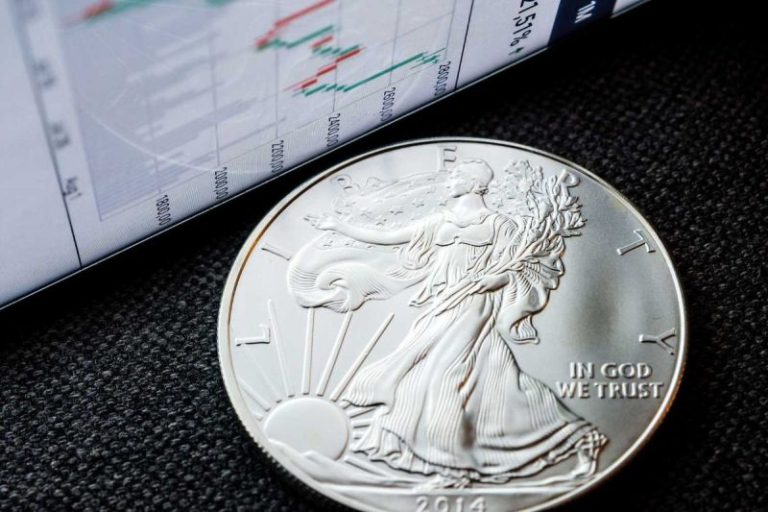
The silver price reached heights not seen in more than 40 years in 2025, posting new all-time highs in the fourth quarter amid a supply deficit, expanding industrial use and rising safe-haven demand.

The white metal reached its highest point for the year in mid-December, breaking through US$64 per ounce following an interest rate cut from the US Federal Reserve. With investors looking for non-interest bearing assets in which to store and grow their wealth, the world’s metals exchanges are having a hard time keeping their silver inventories stocked.

What will 2026 hold for silver? As the new year approaches, investors are closely watching how changes in monetary policy and global uncertainty could impact the precious metal, along with supply and demand trends in the space.

Here’s what experts see coming for silver in 2026.

Silver’s persistent structural supply deficit

In its ‘2025/2026 Precious Metals Investment’ report, Metal Focus forecasts a fifth straight year of a silver supply deficit for 2025, coming in at 63.4 million ounces. And while that figure is expected to retract to 30.5 million ounces in 2026, the firm is confident that the deficit will continue to be a factor for silver this coming year.

Essentially, silver is in an entrenched structural deficit tied to a multi-year mine supply shortfall that can’t keep up with both rising industrial use and strong investment demand. Aboveground silver stocks are running dry, with silver mine production has decreased over the past decade, especially in the silver-mining hubs of Central and South America.

Even with silver at never-seen-before prices, it could be years before any sort of balance returns to the market.

“If the silver that you produce is a small portion of your stream of revenues, you’re not that motivated to try to produce more silver,” he explained. In fact, Krauth said a higher silver price could result in less silver coming to market as miners switch to processing lower-grade material that was once uneconomical and might even contain less silver.

On the exploration side, it takes 10 to 15 years to bring a silver deposit through discovery and into production.

“The reaction time to higher prices is actually really, really slow. I think we’re going to see these shortages and tightness persist,” Krauth added.

Industrial demand for silver from cleantech and AI

Industrial demand was another major catalyst for higher silver prices in 2025, and is expected to remain a strong tailwind for the silver market next year and beyond.

In a December report titled ‘Silver, the Next Generation Metal,’ the Silver Institute explains that heavy demand for silver through 2030 is coming from the cleantech sector — mainly from the solar and electric vehicle (EV) segments — and emerging technologies such as artificial intelligence (AI) and data centers. Silver’s critical role in these economically important industries led the US government to include silver on its list of critical minerals this year.

A staunch believer in solar as a major pillar of the silver market, Krauth advised that it is “dangerous to underestimate” the level of demand yet to come from the industry. This is especially true if investors consider the projected growth of AI data centers in the US alone, and the amount of energy needed to power their operations.

“I think about 80 percent of data centers are located in the US, and their demand for electricity is expected to grow by 22 percent over the next decade. AI alone, on top of data center demand for electricity, is expected to grow by 31 percent over the next decade,” he said, adding that over the past year data centers in the US have chosen solar energy five times more than nuclear options for powering their operations.

Safe-haven investment demand magnifying silver scarcity

As a precious metal, silver tracks gold. Lower interest rates, a return to quantitative easing by the Fed, a weaker US dollar, rising inflation, increased geopolitical uncertainty — all of these factors that benefit its sister metal are also highly supportive of the silver price. And as an affordable alternative to gold, silver is attracting significant retail and institutional investment, including massive exchange-traded fund (ETF) inflows.

Ole Hansen, head of commodity strategy at Saxo Bank, posted to X on December 10:

‘Meanwhile, inflows into silver-backed ETFs have reached around 130 million ounces this year, lifting total holdings to roughly 844 million ounces—an 18% increase.’

Safe-haven investment appeal for silver is expected to grow further in 2026. Concerns over the Fed’s independence and the very real likelihood that Chair Jerome Powell will be replaced in May with someone more amenable to the Trump White House’s low interest rate demands are big factors boosting demand for silver as a portfolio hedge.

Substantial demand for silver as a safe-haven investment has already led to mint shortages in silver bars and coins and tight inventories in futures markets, primarily in London, New York and Shanghai.

For example, Bloomberg reported in late November that silver inventories at the Shanghai Futures Exchange had hit their lowest level since 2015. These shortages are resulting in rising lease rates and borrowing costs, which points to genuine challenges with delivery of physical metal rather than mere speculative positioning.

In India, where gold jewelry is traditionally a form of wealth preservation, there’s strong demand for silver jewelry as buyers look for a more affordable option with the gold price now over US$4,300 per ounce.

Demand for silver bars and silver ETFs is also on the rise in India, already the world’s largest consumer of the white metal. The nation imports 80 percent of its silver demand.

Silver price forecast for 2026

Silver’s notoriety as a highly volatile metal — it’s not called ‘the devil’s metal’ for nothing — and its recent jaw-dropping rally, has many precious metals analysts hesitating to define a clear price target for 2026.

Although the case for much higher silver prices is a strong one, there are risks that could jeopardize the metal’s upward momentum. For example, Mind Money’s Khandoshko suggested that a global economic slowdown or sudden liquidity corrections could apply downward pressure on the silver price.

“For 2026, I’d be watching industrial demand trends, Indian imports, ETF flows and any widening price gaps between trading hubs,” she advised. “I’d also pay close attention to sentiment around large unhedged short positions. If trust in paper contracts weakens again, we could see another structural shift in pricing.”

Krauth also cautioned investors to remember that silver is “famously volatile” and while “it’s been fun because the volatility has been to the upside … don’t be surprised if you get some kind of rapid drawdowns.” He views US$50 as the new floor for silver, and gave what he deems a “conservative” forecast of silver in the US$70 range for 2026.

This is in line with Citigroup’s (NYSE:C) prediction that silver will continue to outperform gold and reach upwards of US$70 for 2026, especially if its industrial side fundamentals remain in place.

Chambers referred to silver as the “fast horse” of the precious metals. While industrial demand is important, he believes retail investment demand is the real “juggernaut” for the silver price in the coming year.

Securities Disclosure: I, Melissa Pistilli, hold no direct investment interest in any company mentioned in this article.

This post appeared first on investingnews.com

LaFleur Minerals Inc. (CSE: LFLR,OTC:LFLRF) (FSE: 3WK0) (‘LaFleur Minerals’ or the ‘Company’ or ‘Issuer’) is pleased to announce a non-brokered private placement offering of up to 6,000,000 units of the Company (the ‘Units’) at a price of $0.50 per Unit gross proceeds of up to $3,000,000 (the ‘LIFE Offering’). Each Unit will consist of one (1) common share in the capital of the Company (each a ‘Common Share’) and one (1) Common Share purchase warrant (a ‘Warrant’) granting the holder the right to purchase one (1) additional Common Share of the Company (a ‘Warrant Share’) at a price of $0.75 at any time on or before 24 months from the Closing Date (defined below). The Warrants will be subject to an accelerated expiry upon thirty (30) business days’ notice from the Company in the event the closing price of the Common Shares on the Canadian Securities Exchange (the ‘CSE’) is equal to or above a price of $0.90 for fourteen (14) consecutive trading days any time after closing of the Offering.

The gross proceeds from the LIFE Offering will be used for the commissioning and restart of gold production operations at the Company’s wholly-owned Beacon Gold Mine and Mill, as well as work at the Company’s Swanson Gold Project in Quebec and for and general working capital purposes.

The Units will be offered for sale pursuant to the listed issuer financing exemption under Part 5A of National Instrument 45-106 – Prospectus Exemptions, as amended by CSA Coordinated Blanket Order 45-935 – Exemptions from Certain Conditions of the Listed Issuer Financing Exemption, to purchasers resident in Canada, excluding Quebec, and other qualifying jurisdictions.

The securities offered under the LIFE Offering will not be subject to a hold period in accordance with applicable Canadian securities laws. There is an offering document (the ‘Offering Document‘) related to the LIFE Offering that can be accessed under the Issuer’s profile at www.sedarplus.ca and at the Company’s website at www.lafleurminerals.com. Prospective investors should read this Offering Document before making an investment decision.

Flow-Through (FT) Offering

The Company also intends to offer up to 2,500,000 flow-through units of the Company (the ‘FT Units‘) at a price of $0.60 per FT Unit for gross proceeds of up to $1,500,000 (the ‘FT Offering‘). Each FT Unit will consist of one (1) Common Share to be issued as a ‘flow-through share’ within the meaning of the Income Tax Act (Canada) and the Taxation Act (Québec) (each, a ‘FT Share‘) and one (1) Warrant which shall have the same terms as the Warrants included in the Units to be issued in the LIFE Offering.

The gross proceeds from the issuance and sale of the FT Units will be used on the Company’s Swanson Gold Project to incur ‘Canadian Exploration Expenses’ as such term is defined under subsection 66.1(6) of the Income Tax Act (Canada) and will qualify as ‘flow-through mining expenditures’ as defined in subsection 127(9) of the Income Tax Act (Canada) (or would so qualify if the references to ‘before 2026’ in paragraph (a) of the definition of ‘flow-through mining expenditure’ in subsection 127(9) of the Tax Act were read as ‘before 2027’ and the references in paragraphs (c) and (d) of that definition to ‘before April 2025’ were read as ‘before April 2026’). The qualifying expenditures will be incurred on or before December 31, 2026, and will be renounced to the subscribers with an effective date no later than December 31, 2025, in an aggregate amount not less than the gross proceeds raised from the issuance of the FT Shares.

All securities issued in connection with the FT Offering will be subject to a statutory hold period of four months and one day following the date of issuance in accordance with applicable Canadian securities laws.

The Company has also agreed to pay qualified finders and brokers a cash commission of 7.0% of the aggregate gross proceeds of the LIFE Offering and FT Offering and such number of broker warrants (the ‘Broker Warrants‘) as is equal to 7.0% of the number of Units sold under the LIFE Offering and FT Offering. Each Broker Warrant will entitle the holder to purchase one Common Share at an exercise price equal to the Offering Price for a period of 24 months following the Closing Date.

The closing of the LIFE Offering and FT Offering is expected to occur on or about December 31, 2025 (the ‘Closing Date‘), or such other earlier or later date as the Company may determine.

The Company continues to progress in the closing of its previously announced brokered private placement of gold-linked convertible notes, as announced on November 5, 2025, a financing that aims to raise up to C$7 million to fund the restart of the company’s Beacon Gold Mill in Val d’Or, Quebec.

This news release is not an offer to sell or the solicitation of an offer to buy the securities in the United States or in any jurisdiction in which such offer, solicitation or sale would be unlawful prior to qualification or registration under the securities laws of such jurisdiction. The securities referred to in this news release have not been, nor will they be, registered under the United States Securities Act of 1933, as amended (the ‘U.S. Securities Act’), and such securities may not be offered or sold within the United States or to, or for the account or benefit of, U.S. persons absent an exemption from registration under the U.S. Securities Act and applicable U.S. state securities laws. ‘United States’ and ‘U.S. person’ are as defined in Regulation S under the U.S Securities Act.

About LaFleur Minerals Inc.

LaFleur Minerals Inc. (CSE: LFLR,OTC:LFLRF) (FSE: 3WK0) is focused on the development of district-scale gold projects in the Abitibi Gold Belt near Val-d’Or, Québec. Our mission is to advance mining projects with a laser focus on our resource-stage Swanson Gold Deposit and the Beacon Gold Mill, which have significant potential to deliver long-term value. The Swanson Gold Project is approximately 18,304 hectares (183 km2) in size and includes several prospects rich in gold and critical metals previously held by Monarch Mining, Abcourt Mines, and Globex Mining. LaFleur has recently consolidated a large land package along a major structural break that hosts the Swanson, Bartec, and Jolin gold deposits and several other showings which make up the Swanson Gold Project. The Swanson Gold Project is easily accessible by road allowing direct access to several nearby gold mills, further enhancing its development potential. Lafleur Mineral’s fully refurbished and permitted Beacon Gold Mill is capable of processing over 750 tonnes per day and is being considered for processing mineralized material at Swanson and for custom milling operations for other nearby gold projects.

ON BEHALF OF LaFleur Minerals INC.

Paul Ténière, M.Sc., P.Geo.
Chief Executive Officer
E: info@lafleurminerals.com

LaFleur Minerals Inc.
1500-1055 West Georgia Street
Vancouver, BC V6E 4N7

Neither the Canadian Securities Exchange nor its Regulation Services Provider accepts responsibility for the adequacy or accuracy of this news release.

Cautionary Statement Regarding ‘Forward-Looking’ Information

This news release includes certain statements that may be deemed ‘forward-looking statements’. All statements in this new release, other than statements of historical facts, that address events or developments that the Company expects to occur, are forward-looking statements. Forward-looking statements are statements that are not historical facts and are generally, but not always, identified by the words ‘expects’, ‘plans’, ‘anticipates’, ‘believes’, ‘intends’, ‘estimates’, ‘projects’, ‘potential’ and similar expressions, or that events or conditions ‘will’, ‘would’, ‘may’, ‘could’ or ‘should’ occur. Forward-looking statements in this news release include, without limitation, statements related to the closing of the LIFE Offering and the FT Offering, and the anticipated use of proceeds from the LIFE Offering and the FT Offering. Although the Company believes the expectations expressed in such forward-looking statements are based on reasonable assumptions, such statements are not guarantees of future performance and actual results may differ materially from those in the forward-looking statements. Factors that could cause the actual results to differ materially from those in forward-looking statements include market prices, continued availability of capital and financing, and general economic, market or business conditions. Investors are cautioned that any such statements are not guarantees of future performance and actual results or developments may differ materially from those projected in the forward-looking statements. Forward-looking statements are based on the beliefs, estimates and opinions of the Company’s management on the date the statements are made. Except as required by applicable securities laws, the Company undertakes no obligation to update these forward-looking statements in the event that management’s beliefs, estimates or opinions, or other factors, should change.

THIS NEWS RELEASE IS NOT FOR DISTRIBUTION TO U.S. NEWSWIRE SERVICES FOR DISSEMINATION IN THE UNITED STATES

To view the source version of this press release, please visit https://www.newsfilecorp.com/release/278189

News Provided by Newsfile via QuoteMedia

This post appeared first on investingnews.com

American Rare Earths (ASX: ARR | OTCQX: ARRNF | ADR: AMRRY) (“ARR” or the “Company”) has successfully completed another critical stage in its mineral processing program by producing a mixed rare earths oxide (“MREO”) using the updated preliminary PFS mineral processing flowsheet.

Highlights

  • Rare earth oxides were produced from Halleck Creek ore using the updated preliminary Pre-Feasibility Study (“PFS”) mineral processing flowsheet1
  • A Mixed Rare Earth Oxalate and Mixed Rare Earth Oxide was created from purified leachate solution using the material from the impurity removal testing2
  • This is the most significant technical milestone achieved for the Project to date

MREO from Halleck Creek (“the Project”) was produced using the material – a pregnant leach solution (“PLS”) – from the impurity removal testing campaign3. This was achieved through precipitating a mixed rare earth oxalate and then creating MREO powder (see Figure 1). This major technical milestone confirms that rare earths can be extracted into metallic oxides from Halleck Creek ore using the updated preliminary PFS mineral processing flowsheet currently being finalized for the upcoming PFS. Solvent extraction computer simulation is now underway, using the results of these tests.

SGS in Lakefield, Ontario, Canada created the MREO from the Halleck Creek PLS through a two- step process. The first step consists of precipitating the metals in solution using oxalic acid to create a mixed rare earth oxalate. Oxalic acid is highly selective in precipitating rare earth elements (“REE”) from PLS while other elements stay in solution. SGS performed three precipitation tests using variable oxalic acid addition rates. The second step, called calcining, involved SGS heating the combined mixed rare earth oxalates to 1,000oC to oxidize the material into a MREO. A beneficial effect of calcining is that it oxidizes the cerium, converting it from Ce3+ to Ce4+. Ce4+ is not soluble in the reagent which will be used to dissolve REEs from the MREO for solvent extraction.

Click here for the full ASX Release

This post appeared first on investingnews.com

US President Donald Trump is reportedly weighing a major shift in federal drug policy that would relax decades-old restrictions on cannabis, potentially injecting new life into the industry.

Six people familiar with the discussions told the Washington Post that Trump is preparing an executive order directing federal agencies to pursue the reclassification of cannabis from a Schedule I substance to Schedule III.

The effort, still under internal review, was the focus of a December 10 phone call between Trump and House Speaker Mike Johnson, several of the sources said. Joining the call were cannabis industry executives, Secretary of Health Robert F. Kennedy Jr. and Mehmet Oz, administrator for the Centers for Medicare & Medicaid Services.

The people spoke on the condition of anonymity because they were not authorized to discuss the meeting publicly.

Johnson reportedly expressed skepticism and laid out several studies and data points opposing rescheduling, but by the end of the call, Trump appeared inclined to proceed. However, the sources emphasized that no final decision has been made and that he could still change course; this was later confirmed by another White House official.

Reclassification would shift cannabis from Schedule I status — reserved for substances deemed to have high potential for abuse and no accepted medical use — to Schedule III, which includes Tylenol with codeine and certain steroids.

The shift would not legalize recreational use under federal law, but would remove some of the most onerous constraints faced by medical researchers and by companies operating legally in dozens of states.

“This would be the biggest reform in federal cannabis policy since marijuana was made a Schedule I drug in the 1970s,” said Shane Pennington, a DC attorney who represents companies involved in rescheduling litigation.

He noted that while Trump cannot unilaterally change the drug schedule, he can instruct the Department of Justice to bypass a pending administrative hearing and finalize the rule.

The political backdrop has shifted sharply in recent years. Cannabis is legal for medical use in most states and for recreational use in 24, and has become a multibillion-dollar industry. Both Democrats and Republicans have expressed interest in rescheduling even as broader legalization remains deeply contested at the federal level.

For cannabis businesses, reclassification would be economically transformative.

Current tax rules prohibit companies that sell Schedule I substances from deducting ordinary business expenses, a barrier that industry representatives have long described as crushing.

“This monumental change will have a massive, positive effect on thousands of state-legal cannabis businesses around the country,” said Brian Vicente, founding partner at Vicente. “Rescheduling releases cannabis businesses from the crippling tax burden they have been shackled with and allows these businesses to grow and prosper.”

Policy advocates say the move would eliminate a central pillar of the federal government’s 50 year prohibition regime, while also highlighting how much work remains.

“This is the beginning of a new era of public health policy,” said Shawn Hauser, also a partner at Vicente.

She called the directive “a long-overdue acknowledgment of marijuana’s medical value and safety,” while warning that rescheduling alone will not resolve broader regulatory inconsistencies or criminal justice disparities.

Trump, who said in August that he was “looking at reclassification,” inherited a stalled proposal originally launched by then-President Joe Biden that recommended moving cannabis to Schedule III.

Rescheduling’s origins trace back to October 2022, when Biden instructed the Department of Health and the Drug Enforcement Administration (DEA) to review whether the current classification for cannabis is scientifically justified.

Health officials concluded in 2023 that it is not, prompting the DEA to propose shifting cannabis to Schedule III in early 2024. The proposed rule has been frozen since March 2025.

Securities Disclosure: I, Giann Liguid, hold no direct investment interest in any company mentioned in this article.

This post appeared first on investingnews.com

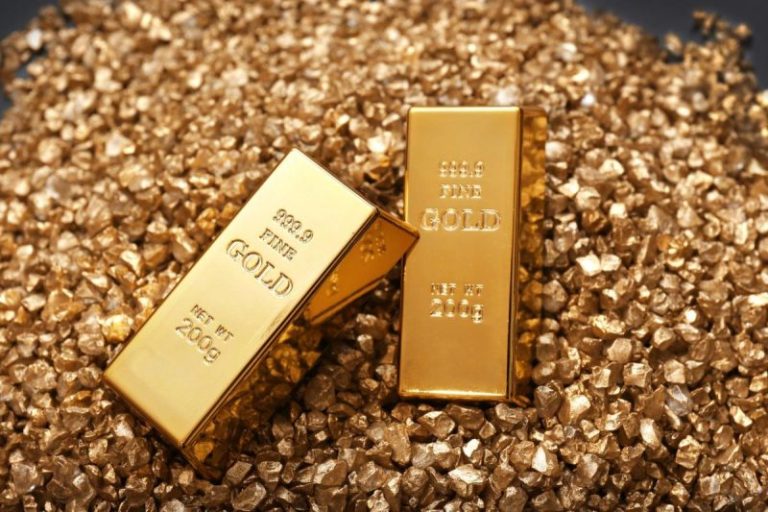
2025 was a watershed year for gold, which set new highs as its safe-haven appeal increased.

As global uncertainty intensified, the metal began to receive mainstream attention as a standout asset.

With the year set to mark one of gold’s strongest annual performances in decades, it’s a fitting moment to look back and revisit our most popular gold news stories of 2025.

Read on to see what caught our audience’s attention over the last 12 months.

1. Germany, Italy Face Pressure to Repatriate US$245 Billion in Gold as Trust in US Custody Wavers

Publish date: June 24, 2025

In June, growing distrust in US custodianship of foreign gold reserves and political uncertainty linked to the Trump administration put pressure on Germany and Italy to repatriate their foreign bullion.

At the time, both countries collectively held more than US$245 billion in gold reserves at the Federal Reserve Bank of New York, and local political leaders were raising concerns that the US had become a less neutral custodian.

German taxpayer advocates warned that increasing political influence over the US Federal Reserve could jeopardize access to foreign-owned bullion. Similar concerns surfaced in Italy, where critics argued that continuing to store gold abroad posed a strategic risk during a period of heightened geopolitical tension.

Germany repatriated 674 metric tons of gold from 2013 to 2017, but 37 percent of its reserves remain in New York.

2. What Does the GDX Index Change Mean for Gold Investors?

Publish date: September 19, 2025

In September, the world’s largest gold-mining stock exchange-traded fund (ETF) — the US$20.5 billion VanEck Gold Miners ETF (ARCA:GDX) — underwent a major structural overhaul.

VanEck transitioned GDX from the NYSE Arca Gold Miners Index to the MarketVector Global Gold Miners Index, ending a benchmark relationship in place since 2004.

The switch adopted free-float market-cap rules that exclude locked-up or government-held shares, aligning the fund with index standards commonly used in broader equity markets.

3. Barrick’s Bristow Steps Down Following Hemlo Sale and Mali Challenges

Publish date: September 29, 2025

Barrick Mining (TSX:ABX,NYSE:B) went through a major leadership transition this year after CEO Mark Bristow unexpectedly left the company following nearly seven years at the helm.

Bristow, who had led the company since the 2019 merger with Randgold Resources, stepped down amid strategic disagreements with Barrick Chair John Thornton and a year marked by operational challenges, including ongoing legal and political challenges in Mali, where its Loulo-Gounkoto complex is located.

Bristow’s departure also came shortly after Barrick finalized a US$1.09 billion sale of its Hemlo mine in Ontario, formally marking its exit from primary Canadian gold production to concentrate on higher-margin international operations.

Chief Operating Officer Mark Hill assumed interim CEO responsibilities as the board initiated a global search for a successor. Hill previously oversaw Barrick’s Latin America and Asia-Pacific operations, and played a key role in the company’s initial decision to explore the Fourmile gold project in Nevada.

4. Mali Enforces Gold Seizure at Barrick’s Loulo-Gounkoto Mine

Publish date: January 13, 2025

Barrick’s tensions with Mali’s military government intensified at the start of 2025 after authorities seized gold shipments from the firm’s Loulo-Gounkoto mine, which accounts for roughly 14 percent of its annual production.

At the time, officials claimed Barrick owed more than US$500 million in unpaid taxes and state dividends under a revised mining code implemented in 2023. Detentions and legal threats against local staff heightened the conflict further, and the government reportedly intercepted approximately 3 metric tons of bullion.

The year-long dispute reached a conclusion on November 24, when Barrick confirmed a settlement with the Malian government that restores full control over the Loulo-Gounkoto mine.

Under the terms, the company was to pay 244 billion CFA francs (US$430 million), with 144 billion CFA francs due within six days of signing and an additional 50 billion CFA francs applied through VAT credit offsets.

In exchange, Mali was to drop all charges against Barrick, lift state control of Loulo-Gounkoto, release four detained employees and renew the company’s mining permit for another decade.

The agreement also requires Barrick to comply with Mali’s 2023 mining code — the same legislation that triggered the original confrontation.

5. Navigating Uncertainty: How Trump’s Tariffs Are Affecting the Gold Market

Publish date: August 27, 2025

US trade policy sparked gold market turbulence after confusion surrounding import tariffs, including whether Swiss-refined 1 kilogram and 100 ounce bars would be subject to rates near 39 percent. Traders rushed to secure physical imports amid the uncertainty, widening spreads between New York futures and London spot benchmarks.

The volatility eased only after US officials clarified their position.

Securities Disclosure: I, Giann Liguid, hold no direct investment interest in any company mentioned in this article.
This post appeared first on investingnews.com